


Glasgow At War
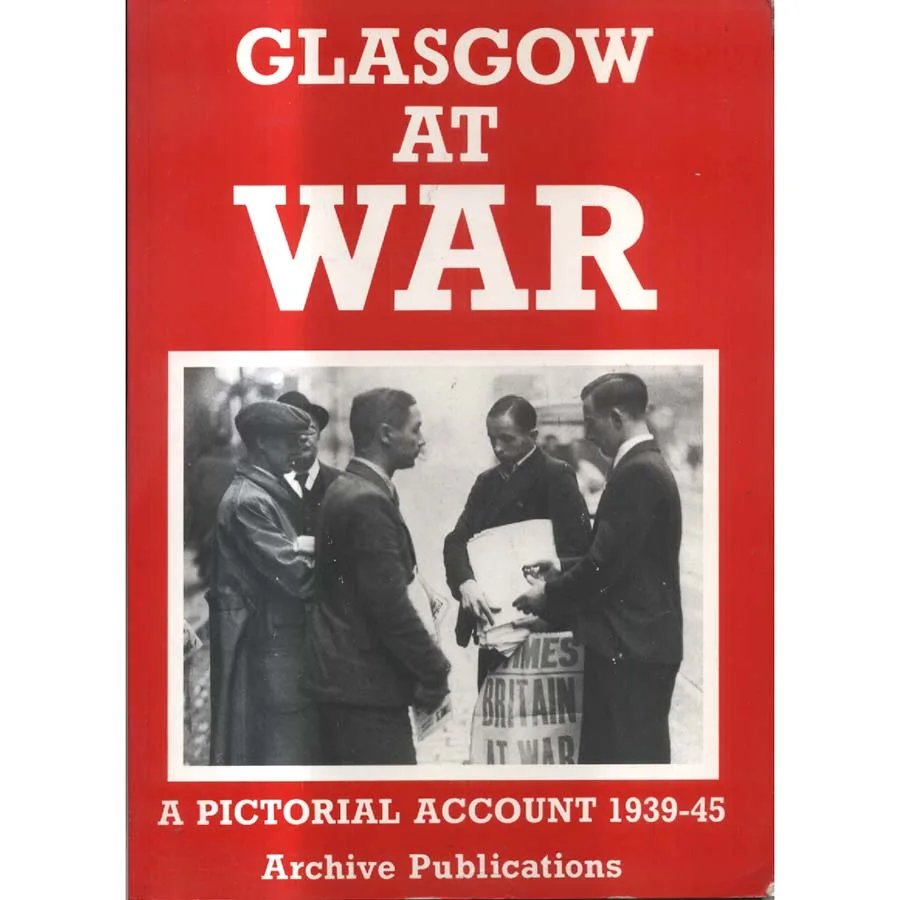
Publisher: Archive Publications
Format: Paperback
ISBN: 9780948946035
Cities remember wars in curious ways. The bombs stop falling, the blackout curtains come down, the ration books disappear and the buildings are rebuilt, yet decades later the echoes remain tucked into old photographs, faded street corners and stories passed quietly from one generation to the next. Glasgow at War by Paul Harris is one such collection of echoes, capturing the remarkable resilience of a city that carried on working, building, shipbuilding and generally refusing to be intimidated while the world around it seemed determined to fall apart.
Published in 1986 by Archive Publications, this richly illustrated volume explores Glasgow during the Second World War, documenting how one of Britain’s greatest industrial cities adapted to life under the constant shadow of conflict. Shipyards worked around the clock, factories produced vital equipment, civilians endured rationing and air raids, and ordinary Glaswegians somehow continued to live ordinary lives in the most extraordinary circumstances.
The irony is impossible to ignore. Glasgow has never exactly cultivated a reputation for being an easy city to frighten. If the Luftwaffe imagined a few bombs would persuade Glaswegians to quietly give up, they had clearly underestimated generations of people who regarded bad weather, hard work and impossible situations as little more than a normal Tuesday.
Paul Harris presents the story through an engaging combination of photographs, historical detail and contemporary accounts, allowing readers to witness wartime Glasgow as it really was. The images are especially compelling. Streets filled with military vehicles, workers in the shipyards, civil defence volunteers, damaged buildings and everyday life continuing against the odds all remind us that history isn’t just made by famous leaders—it is lived by ordinary people getting on with remarkably difficult lives.
There is something deeply moving about local history books like this because they preserve the details that grand military histories often overlook. While generals debated strategy and politicians made speeches, somebody still had to catch the tram, queue for food, report for work, mend damaged buildings and put the kettle on whenever circumstances permitted. Those small acts of normality become quietly heroic when viewed through the lens of wartime.
Of course, Glasgow’s importance during the conflict made it an obvious target. Its shipyards, engineering works and industrial strength were vital to Britain’s war effort, and that importance is woven throughout the book. Yet Harris wisely avoids reducing the city to statistics and military production figures alone. This is a book about people as much as places—a portrait of endurance rather than merely destruction.
There is also an unintended charm in looking back through photographs taken over forty years before the book itself was published. Buildings have changed, fashions have vanished, vehicles now look wonderfully antiquated, and yet many streets remain instantly recognisable. History has a habit of feeling surprisingly close when viewed through familiar landmarks.
And then there is the wonderfully Glaswegian element that no photograph quite captures: the suspicion that even during the darkest moments someone was still making a joke, someone was still complaining that things had been better before the war, and someone else was confidently explaining how they would have organised the whole affair much more efficiently. Some traditions are simply indestructible.
This Good condition copy, offered by Crappy Old Books, has itself stood the test of time rather admirably. It bears the honest signs of careful reading while remaining a thoroughly enjoyable and informative volume for historians, Glaswegians, family researchers or anyone fascinated by Britain’s home front during the Second World War. No air raid sirens are included, no ration coupons have been left between the pages, and thankfully the only blackout you’ll experience is losing track of time while immersed in one of Scotland’s most remarkable wartime stories.
Keep browsing: See more War books Other books by Paul Harris
